
KEY TAKEAWAYS |
• A rat rod build differs from a restoration in one fundamental way: compatibility across makes, models, and years is your responsibility, not the catalog's. |
• Source the frame and chassis first. Every other decision flows from the wheelbase, width, and frame rail height you commit to. |
• Universal parts work in rat rod builds where vehicle-specific parts do not exist or are too expensive. Know which category each part falls into. |
• Plan the fuel system and electrical system before you order suspension or body components. These systems are harder to retrofit than to plan for in advance. |
• Hot Rod Hardware stocks universal suspension components, structural sheet metal, fuel system parts, engine accessories, and electrical components for multi-platform rat rod builds. |
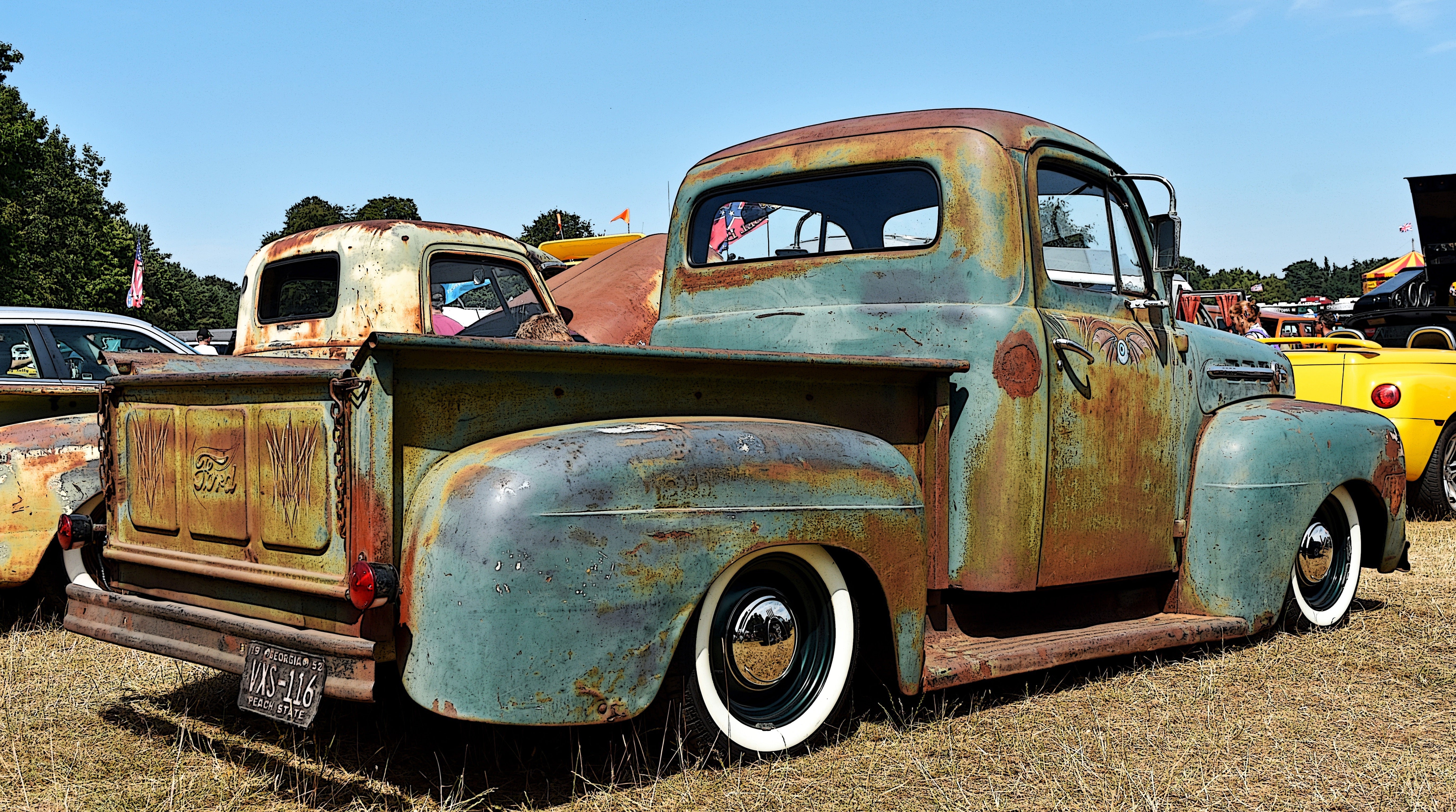
A rat rod is not a restoration with rust left on purpose. It is a build philosophy: take what is available, make it work, and drive it. The builder defines compatibility rather than looking it up in a catalog. That freedom is the appeal and the challenge. You can put a Cadillac engine in a Model A body on a 1940 truck frame, and no one will tell you it is wrong. But you will have to figure out how all of it goes together. This guide covers the ten parts categories every rat rod build requires, in the order you should source them.
The Rat Rod Build Philosophy
Traditional hot rods start with a specific platform and build to restore or improve it. Rat rods start with a vision and find parts that fit the vision. Year and make stay flexible, but systems thinking does not. A rat rod that looks amazing on a trailer and breaks down every time it moves is not a rat rod. It is an unfinished project.
The builds that work share one characteristic: the builder planned the major systems before acquiring the body. Frame, drivetrain, fuel, electrical, and suspension were considered as a package before the first part was purchased. This guide is organized around that sequence.
Category 1: Frame and Chassis
The frame is the foundation of the build. Every other dimension flows from it. Choose the frame before choosing the body, not the other way around. A 1932 Ford body on a 1940 truck frame requires heavy modification to both. A 1929 Ford body on a 1932 Ford frame is a well-documented swap with known dimensions.
For rat rod builds, the most common donor frames are pre-war Fords (1928-1948) because they are narrow, lightweight, and carry a known hot rod history. Channel, box, or Z the frame rails to lower the car after the body is mocked up, not before. You cannot unlower a frame that is already channeled.
Reproduction crossmembers for 1928-1948 Ford frames are available from Hot Rod Hardware. For non-Ford frames, inspect all crossmembers and boxing plates for cracks at the welds before committing to the chassis.
Category 2: Suspension
The suspension determines how the car rides, handles, and sits. Most rat rod builders put stance ahead of handling: the car needs to look right before it needs to corner. That is fine as long as the suspension is sound and the alignment falls within safe parameters.
Pete and Jake's Hot Rod Parts manufactures traditional-style front suspension components for 1928-1948 Fords, including dropped axles, spring perches, and alignment kits. Their components maintain the visual character of traditional hot rod front ends while offering improved geometry over stock.
Heidt's Hot Rod Shop offers Mustang II IFS kits for early Ford and GM chassis as a bolt-in alternative to the traditional front axle. The Mustang II geometry produces noticeably better handling than a traditional dropped axle at the cost of a different visual character. Choose based on what matters most to your build.
For the rear, a parallel four-bar setup with coil-over shocks is the most versatile option for a rat rod. It retains the live rear axle visual character of the era while eliminating leaf spring wind-up. Components for 1928-1948 Ford rear ends are available from Pete and Jake's and Heidt's.
Category 3: Brakes
A rat rod that cannot stop is dangerous, not cool. The braking system is non-negotiable regardless of build philosophy. Most pre-war cars used mechanical drum brakes, cable-actuated systems that offer limited stopping force by modern standards. At minimum, convert to hydraulic drum brakes. For any car driven at highway speeds, add front disc brakes.
Master Power Brakes manufactures brake conversion kits and master cylinder assemblies that work with early Ford and GM chassis. Their kits include everything needed to convert from mechanical to hydraulic braking and are available in drum/drum or disc/drum configurations.
For front disc conversions on a traditional hot rod chassis, confirm the caliper bracket mounts to your specific spindle. Front disc kits for Model A and 1932-48 Ford spindles are available with the correct bracket geometry. Do not adapt a kit designed for a different spindle without verifying caliper-to-rotor clearance.
Category 4: Engine and Mounts
The rat rod engine choice defines the character of the build. Traditional builds use flathead Fords, Y-blocks, or early Chevy inline sixes for period authenticity. Modern builds use small block Chevys, big blocks, or LS engines for reliability and power. Both are correct.
Engine mounts are typically custom-fabricated for rat rod builds because the engine year, the frame year, and the body year rarely match. A fabricated engine mount plate that bolts to the frame rails and is notched for the specific block casting is the cleanest solution. For SBC swaps into early Ford frames, billet motor mount plates are available that bolt to standard small block Chevy mounting pads and weld to the frame rails.
Consider transmission crossmember location when planning the engine position. The transmission output shaft height determines the driveshaft angle, which affects u-joint operating angle and vibration. Set the engine position with the transmission mock-up in place before finalizing mount dimensions.
Category 5: Fuel System
Plan the fuel system before the body goes on. Tank location, fuel line routing, and pump placement are all far easier to address with open access to the frame rails. Retrofitting fuel lines through a finished body is one of the most frustrating tasks in a rat rod build.
Tanks Inc. manufactures custom fuel tanks for a wide range of early car and truck applications, including custom-position tanks for frame-rail mounting. For a rat rod with a non-stock tank location, a custom tank from Tanks Inc. with a welded return bung is the correct solution. Specify whether the build is carbureted or EFI when ordering. EFI requires a return bung and a high-pressure in-tank or in-line pump.
Route all fuel lines in heat-resistant steel hard line along the frame rail, transitioning to flexible AN-fitting hose at the tank and pump connections. Do not use standard rubber fuel hose for long frame-rail runs. Vibration fatigues the hose at the clamps over time.
Category 6: Electrical System
The electrical system is always the last thing rat rod builders think about and the first thing that strands them. On a build that mixes components from multiple eras, the factory wiring from any of those eras is unusable. Start fresh with a purpose-built street rod wiring harness.
American Autowire street rod harnesses are designed for exactly this application: a custom car with modern accessories and no existing wiring infrastructure to work around. Their Highway Series harnesses include labeled, fused circuits for all major systems and are designed to be routed and connected without factory reference points. Hot Rod Hardware stocks American Autowire harnesses.
Plan the circuit count before ordering the harness. Add up: ignition, fuel pump, headlights, tail lights, brake lights, turn signals, horn, electric fan (if applicable), and any accessories. The Highway 22 (22 circuits) covers most rat rod builds with room to spare. High-accessory builds may require additional circuits.
Category 7: Structural Sheet Metal
The body sheet metal defines the character of the build. Most rat rod builders use original sheet metal, sometimes weathered on purpose, rather than reproduction panels. The exception is structural floor pans and firewall sections, which must be sound regardless of how rough the exterior looks.
A body that looks weathered on the outside while having solid, well-welded floor pans and an intact firewall is a correct rat rod. A body with holes in the floor covered with floor mats is a hazard. Source reproduction floor pans for your specific body before acquiring the body if possible. Knowing the panels are available removes one major sourcing risk.
Hot Rod Hardware stocks Direct Sheet Metal floor pans and firewall sections for 1928-1954 Ford and Chevy applications. Rootlieb Inc. covers body panels for 1928-1948 Ford applications.
Category 8: Interior
Rat rod interiors range from bare metal with a bucket seat to fully upholstered period-correct cabins. The minimum requirement is a secure seat with functional seat belts, a working steering wheel, and functional instruments. Beyond that, the interior is expression.
For a functional minimum instrument cluster, a single-unit gauge package covering speedometer, fuel, oil pressure, and temperature in a compact housing mounts in a custom or modified dash opening. A working speedometer, fuel gauge, oil pressure warning, and water temperature warning are the functional minimum for any street-driven car.
Seat mounting on a rat rod usually requires custom fabrication. The body floor may not have stock seat mounting locations, and the chosen seat may come from a different vehicle entirely. Use a minimum four-point mount pattern with 5/16-inch hardware for any seat installation. The seat is a safety component.
Category 9: Exhaust Headers
Headers on a rat rod are visible components as much as functional ones. Lakester headers, zoomies, and side-exit pipes are part of the visual character of the build. Functional requirements take a back seat to visual intent on most rat rod builds, but the headers still need to clear the frame rails, the steering linkage, and the body at operating temperature.
For early Ford frames with SBC swaps, aftermarket headers with 1-5/8 to 1-3/4 inch primary tubes are available with collector exits in downward, side-exit, and straight-back configurations. Confirm header primary tube diameter against the engine's power range. Headers sized for a 400 HP engine restrict flow on a 250 HP street driver.
Mock up headers with the body in place and the engine at operating position before welding any mounts or cutting exhaust holes. Headers that clear everything on a bare frame may contact the body or the steering linkage once the body is mounted.
Category 10: Wheels and Tires
Wheels and tires are the final dimension of a rat rod build. The stance, how the car sits relative to the wheel opening, is set here. Wide whites, bias-ply blackwalls, or modern radials all send different signals about the build's era and intent.
For traditional rat rods, 15-inch steel wheels in a painted or chrome finish with bias-ply tires are the period-correct choice. Wide front tires and narrow rear tires flip the traditional performance-car proportion and are a signature of the rat rod aesthetic. For a more driveable experience, radial tires in traditional sizes maintain the period look with modern handling characteristics.
Confirm wheel offset and backspace against your brake caliper clearance before ordering. A wheel with too little backspace will contact the caliper or rotor. On a front disc conversion, measure from the spindle face to the inside of the wheel barrel with calipers in place before specifying wheel backspace.
Several of these categories have their own dedicated guides worth reading before you order. For brake system planning, see Hot Rod Drum to Disc Brake Conversions. For early Ford frame work specifically, Model A Frame Modifications covers channeling, boxing, and reinforcement in more depth. And before deciding how much of the chassis to build versus buy, read Complete vs Rolling Chassis.
FAQ
What is the difference between a rat rod and a hot rod?
A hot rod typically refers to a pre-war American car modified for performance, often with a period-correct appearance. A rat rod takes the same foundation but intentionally uses rough, raw, or patina finishes and often mixes components from multiple eras without regard for historical accuracy. The distinction is in build philosophy, not a specific set of parts.
Can I build a rat rod on a non-Ford frame?
Yes. Early Chevy, Dodge, and other domestic frames are used in rat rod builds. Ford frames are most common because pre-war Ford parts are the best-documented and easiest to find, but the build philosophy imposes no platform restriction. Confirm that reproduction structural panels are available for your chosen body before committing to it.
Do I need a wiring harness designed for a rat rod?
No rat rod-specific harness exists. What you need is a street rod wiring harness designed for a custom car with no original wiring infrastructure to reference. American Autowire Highway Series harnesses are designed exactly for this application and are available at Hot Rod Hardware.
What fuel system do I need for a rat rod with a carburetor?
A carbureted rat rod needs a fuel tank with a single outlet, a low-pressure electric or mechanical fuel pump delivering 4-8 PSI, an inline fuel filter, and hard-line supply runs with AN-fitting hose connections at the tank and pump. Tanks Inc. custom tanks are available for frame-rail and relocated tank positions.
Does Hot Rod Hardware carry parts for rat rod builds?
Yes. Hot Rod Hardware stocks universal suspension components, structural sheet metal, fuel system parts, engine accessories, wiring harnesses, and brake components applicable to rat rod builds across a range of eras and platforms. Contact HRH at 507-527-1020 for sourcing assistance on specific applications.
|
Shop Rat Rod Parts at Hot Rod Hardware hotrodhardware.com/collections/suspension-kits-and-components |