
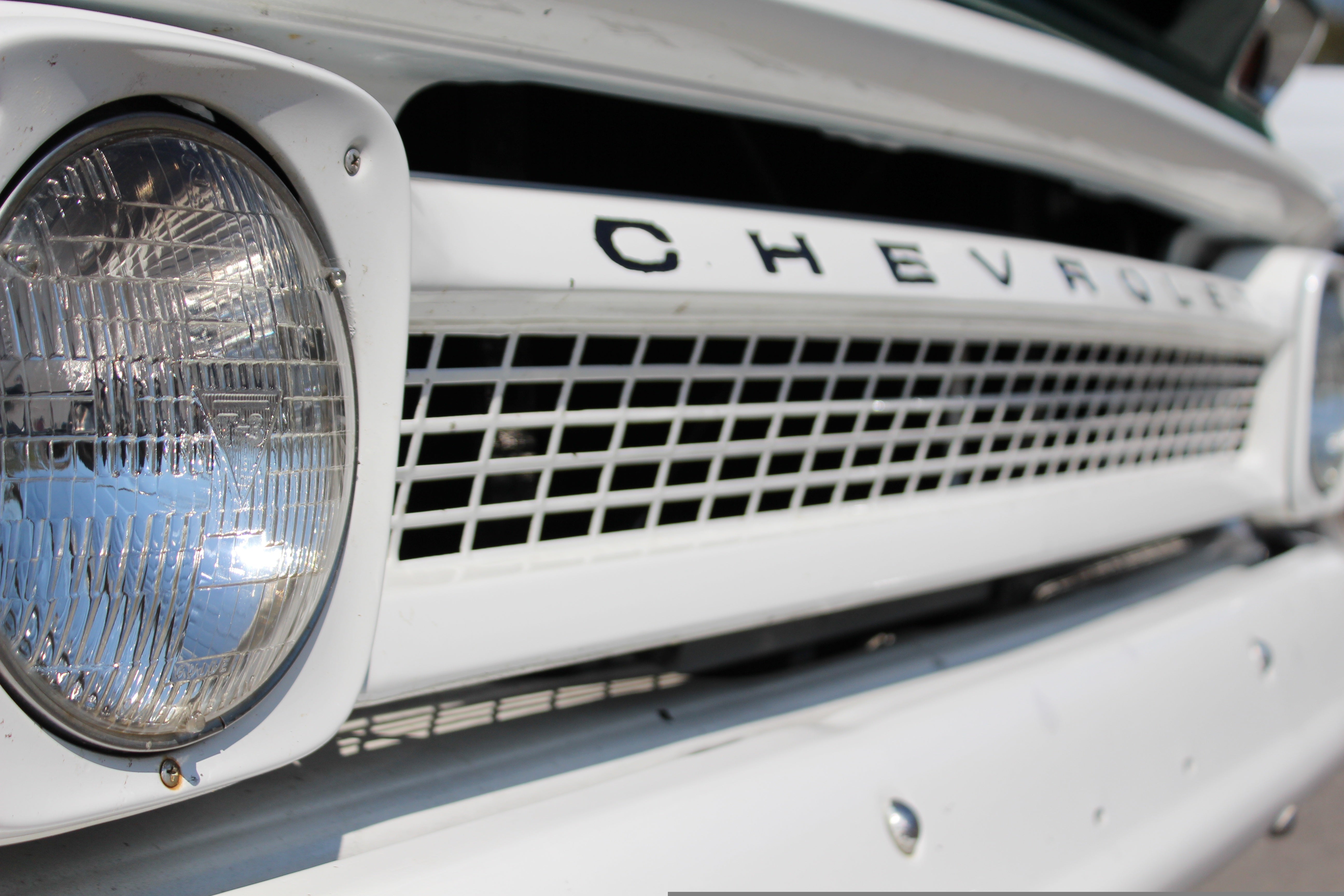
KEY TAKEAWAYS |
• Classic Chevy suspension and brake systems differ across generations. Parts are not interchangeable between 1928-1948, 1949-1954, and 1955-1957 platforms. |
• The 1955-1957 Tri-Five Chevy is HRH's strongest platform for suspension, brake, and sheet metal catalog depth. |
• Heidt's Mustang II IFS kits offer the most widely compatible front suspension upgrade for 1928-1954 Chevy chassis. |
• Master Power Brakes complete brake kits eliminate the guesswork of component matching for disc conversions. |
• Hot Rod Hardware stocks suspension kits, brake conversion components, sheet metal, and engine accessories across the full 1928-1957 Chevy range. |
Classic Chevy covers nearly 30 years of American automotive history within HRH's catalog range. A 1932 Chevy Confederate and a 1957 Bel Air share a brand name and almost nothing else: different wheelbase, different frame architecture, different suspension geometry, different engine mounts. Knowing which parts apply to which generation is the prerequisite for sourcing anything right. This guide maps the major platform generations from 1928 through 1957, what differs between them, and which suspension, brake, and replacement parts apply to each.
The Three Classic Chevy Generations in the HRH Catalog Range
Within the 1928-1957 range, three distinct Chevy platform generations require separate consideration. Each has different chassis geometry, body dimensions, and available aftermarket support.
Generation |
Years |
Chassis Type |
Front Suspension |
Engine Family |
|---|---|---|---|---|
Pre-war Chevy |
1928-1948 |
Body-on-frame, solid front axle |
Solid axle, transverse spring |
Stovebolt inline six |
Postwar Chevy |
1949-1954 |
Body-on-frame, A-arm front susp. |
A-arm, coil spring (from 1949) |
Stovebolt six / early OHV six |
Tri-Five Chevy |
1955-1957 |
Body-on-frame, A-arm front susp. |
A-arm, coil spring |
Small block V8 / Blue Flame six |
Pre-War Chevy (1928-1948): Suspension and Chassis
Pre-war Chevys use a solid front axle on a transverse leaf spring, the same basic architecture as pre-war Fords. This system produces adequate handling for the speeds and roads of its era and little else by modern standards. The ride is harsh, the steering wanders, and the braking is either mechanical (cable-actuated, pre-1936) or early hydraulic (single-circuit, post-1936).
Front Suspension Options for 1928-1948 Chevy
Heidt's Hot Rod Shop manufactures Mustang II IFS kits for pre-war Chevy applications. The Mustang II subframe replaces the solid front axle and transverse spring with a coil-over independent front suspension using rack and pinion steering. The result: a fundamental change in handling character, from solid axle behavior to predictable independent suspension.
For builders who want to retain the solid axle visual character, Pete and Jake's manufactures dropped axles and alignment components for early Chevy applications. A dropped axle lowers the front of the car while maintaining the period-correct front end appearance. Handling improvement is modest but the visual result matches traditional hot rod aesthetics.
Brake Upgrades for Pre-War Chevy
Pre-war Chevys with mechanical (cable-actuated) brakes should be converted to hydraulic at minimum before street driving. Single-circuit hydraulic brakes from 1936-1948 are safer than cable brakes but remain a real liability: a single circuit failure means complete brake loss. Converting to a dual-circuit master cylinder with front disc brakes is the correct safety upgrade for any pre-war Chevy driven regularly on the street.
Master Power Brakes manufactures brake conversion kits for early Chevy applications including dual-circuit master cylinder and booster assemblies. Their kits match the master cylinder, booster, and front disc components as a tested system, eliminating compatibility guesswork.
Postwar Chevy (1949-1954): A New Architecture
The 1949 Chevy introduced an A-arm front suspension with coil springs, replacing the solid front axle used on all previous Chevys. This was a real engineering advance: the new geometry produced better ride and handling than the pre-war solid axle system. The 1949-1954 platform is the first Chevy generation that holds its own in modern traffic without a full front suspension replacement.
Suspension Upgrades for 1949-1954 Chevy
The 1949-1954 A-arm geometry can be upgraded with improved upper and lower control arms, stiffer coil springs, and modern shock absorbers without replacing the entire front clip. For builders who want to retain the stock front suspension architecture while improving performance, this is the correct approach.
For a full suspension transformation, Heidt's offers Mustang II IFS kits for 1949-1954 Chevy chassis that provide rack and pinion steering and coil-over shocks. The improvement in steering precision is substantial on the earlier cars, which used a recirculating ball steering box with significant play.
Brake Upgrades for 1949-1954 Chevy
The 1949-1954 Chevy used a single-circuit hydraulic drum brake system. Converting to a dual-circuit master cylinder is the correct safety upgrade. Adding front disc brakes requires a spindle adapter that interfaces the stock front spindle with modern caliper brackets.
Master Power Brakes disc conversion kits for 1949-1954 Chevys include the spindle adapter, caliper bracket, rotor, caliper, and proportioning valve as a matched set. The proportioning valve ensures the front-disc/rear-drum bias is correctly set for the 1949-1954 platform's weight distribution.
Tri-Five Chevy (1955-1957): The Best-Supported Platform
The 1955-1957 Tri-Five Chevy is the most popular classic car platform in HRH's catalog range. It introduced the small block V8 in 1955, established the visual template for American performance cars, and survives in greater numbers than almost any other pre-1960 American car. The aftermarket support for Tri-Five suspension, brakes, sheet metal, and engine components is the deepest of any platform in the HRH catalog.
Tri-Five Front Suspension Upgrades
The 1955-1957 Chevy came from the factory with an A-arm front suspension that was advanced for its era. For street driving and moderate performance use, the stock geometry with upgraded coil springs and modern shocks is adequate. For builders who want rack and pinion steering and coil-over shocks, Heidt's Mustang II IFS kit for 1955-57 Chevy is a bolt-in replacement for the factory front subframe.
Heidt's Tri-Five kit is available in bolt-in and weld-in versions. The bolt-in kit uses the factory frame rail mounting points and requires no frame modification. The weld-in kit provides greater rigidity and is the correct choice for high-horsepower builds or cars that will see track use.
Tri-Five Brake Upgrades
The 1955-1957 Chevy used single-circuit drum brakes from the factory. Drum-to-disc front brake conversions for the Tri-Five are the best-documented brake upgrade in the classic Chevy aftermarket. Master Power Brakes offers complete Tri-Five disc conversion kits that include the rotor, caliper, bracket, master cylinder, and power brake booster as a matched system.
For builders who want to retain rear drums, the proportioning valve in the Master Power Brakes kit is calibrated for a front-disc/rear-drum Tri-Five. For full four-wheel disc conversions, Master Power Brakes offers rear disc kits for the 1955-57 rear axle.
Tri-Five Sheet Metal
The 1955-1957 Chevy body panels are available as reproduction stampings from Direct Sheet Metal. The Tri-Five catalog covers floor pans, firewall sections, trunk floors, rocker panels, and cab corners for all three model years. Year-specific ordering is required: 1955-56 and 1957 floor pans are different stampings.
Sourcing Strategy by Generation
Before ordering any suspension or brake component, confirm three things: the exact year of your car, the original equipment configuration (drum/drum, convertible vs. hardtop, V8 vs. six), and whether a prior owner modified the suspension or brake system. Modifications, even common ones like a steering box swap or spring lowering, change what parts are required.
For suspension and brake components, always purchase kits from a single manufacturer where possible. Mixing components from different manufacturers means verifying caliper bracket clearance, proportioning valve compatibility, and master cylinder bore size one at a time. A matched kit from Master Power Brakes or Heidt's skips that verification work because the components are tested as a system before shipping.
Hot Rod Hardware stocks Heidt's suspension kits, Master Power Brakes conversion kits, Direct Sheet Metal body panels, and engine accessories for the full 1928-1957 Chevy range. Contact HRH at 507-527-1020 for fitment confirmation on specific applications.
For the brake and suspension work referenced throughout this guide, Hot Rod Drum to Disc Brake Conversions and Hot Rod Suspension Geometry go into more depth on each system. Camaro owners working within this generation range should also read Camaro Mods Done Right, and anyone still shopping for a car should start with What to Look for When Buying a Classic Car.
FAQ
Are 1955 and 1957 Chevy floor pans interchangeable?
No. The 1955-56 and 1957 floor pan stampings differ in the area around the firewall toe panel, where the 1957 includes provisions for the optional Ramjet fuel injection system. Using a 1955-56 pan in a 1957 requires modification at the firewall toe area.
Can I use a Heidt's Mustang II IFS kit from a 1955 Chevy in a 1957 Chevy?
No. Heidt's manufactures year-specific Tri-Five kits because the frame rail dimensions and front crossmember geometry differ between the three model years. Order the kit specific to your year.
What is the difference between single-circuit and dual-circuit master cylinders?
A single-circuit master cylinder uses one hydraulic line to serve all four brakes. A single leak or line failure causes total brake loss. A dual-circuit master cylinder uses two separate circuits, usually front and rear, so a failure in one circuit still leaves the other working. All street-driven cars should have dual-circuit master cylinders regardless of era.
What front disc conversion fits a 1949-1954 Chevy?
Master Power Brakes offers disc conversion kits specific to 1949-1954 Chevy applications. The kit includes a spindle adapter that interfaces the stock 1949-54 Chevy spindle with the caliper bracket. Do not use a 1955-57 Tri-Five disc conversion kit on a 1949-54 Chevy. The spindle geometry is different.
Does Hot Rod Hardware carry Tri-Five Chevy suspension and brake parts?
Yes. Hot Rod Hardware stocks Heidt's suspension kits and Master Power Brakes conversion kits for 1955-1957 Tri-Five Chevy applications, along with Direct Sheet Metal body panels and engine accessories. Contact HRH at 507-527-1020 to confirm availability for your specific year and configuration.
|
Shop Classic Chevy Parts at Hot Rod Hardware hotrodhardware.com/collections/suspension-kits-and-components |