
| KEY TAKEAWAYS |
|---|
| • A digital dash is an electronic instrument cluster that reads modern senders and shows speed, rpm, temperature, oil pressure, fuel level, and voltage on a display or electronically driven needles. |
| • Choose between a full digital display, a vacuum fluorescent display, and electronic analog gauges with an info screen. Readability in sunlight and the look you want should decide it. |
| • Most install problems come from grounds, sender mismatches, and speed signals. Plan those before you mount anything. |
| • A digital dash needs a clean 12-volt system. Six-volt cars need converting first, and a tired original harness should be replaced. |
| • Calibrate the speedometer, tach, and fuel level after install. Every system expects it. |
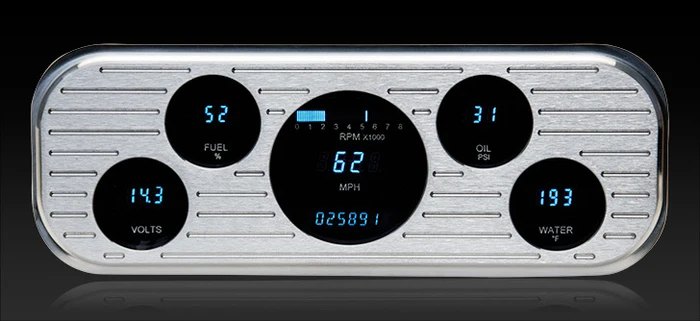
A digital dash is an electronic instrument cluster that reads engine and vehicle sensors and displays speed, rpm, coolant temperature, oil pressure, fuel level, and voltage. In a classic car, a direct-fit digital dash drops into the factory cluster opening, so the interior keeps its original shape while the readings come from modern senders. Universal digital gauge panels do the same job in hot rods without a factory dash.
This guide covers how to choose a digital dash, what senders and signals it needs, and how to install and calibrate it so the readings are accurate the first time you drive. For the bigger picture on interior electrical upgrades, see our guide to classic car interior modernization.
Types of Digital Dash Systems
"Digital dash" covers several display styles. They all use electronic senders, but they look and read differently.
| Display Type | What It Looks Like | Strengths | Best For |
|---|---|---|---|
| Full digital (LCD or TFT) | Screen with configurable gauge layouts | Most information, selectable views, warnings | Restomods and pro-touring builds |
| Vacuum fluorescent (VFD) | Bright segmented readouts and bar graphs | Strong contrast, 1980s-style look | Builds that want an obvious digital look |
| Electronic analog with info screen | Traditional needles plus a small digital display | Classic look with trip, odometer, and alerts | Owners who want a factory-style face |
| Electronic analog gauges | Needles only, driven electronically | Period-correct appearance, simple to read | Restorations and traditional hot rods |
Dakota Digital builds direct-fit systems in several of these styles for popular classic cars and trucks, plus universal panels. Classic Instruments focuses on electronic analog gauges with vintage-style faces. Both use electronic senders, so the installation steps below apply to either.
Direct-Fit or Universal
A direct-fit digital dash is built for a specific vehicle and mounts in the factory cluster location, often reusing the original bezel. It is the fastest route to a finished look. A universal system uses a separate panel or individual gauges, which suits hot rods, custom dashes, and cars where no direct-fit option exists. Browse gauge panels and dash inserts and bezels if you are building a custom layout.
Senders and Signals: Plan These First
The display is only as accurate as the inputs it reads. Most digital dash problems trace back to senders and signal sources, so sort these out before you buy.
Temperature and oil pressure
Most digital dash systems include matched temperature and oil pressure senders. Use them. Factory senders often run on a different resistance range and will read wrong. Install the temperature sender in coolant, not in an air pocket, and use thread sealant that does not insulate the sender from ground if it grounds through its threads.
Fuel level
Factory fuel senders use different resistance ranges by manufacturer and era. Many digital systems can be programmed to match the original sender, so you can keep it if it works. Record the empty and full readings during setup. If the old sender is erratic, replace it now rather than chasing a bouncing gauge later.
Speedometer signal
A digital speedometer needs an electronic signal. Your options are an electronic transmission speed sensor, a signal generator that converts a mechanical speedometer cable drive, a GPS speed sender, or a speed signal from an EFI or transmission controller. GPS senders avoid gear ratio and tire size calibration, which helps on cars with frequent gear or tire changes.
Tachometer signal
The tach reads from the coil negative terminal, the tach output on an ignition box, or the engine controller. Use the dedicated tach output when your ignition system has one. Connecting directly to a coil on a capacitive discharge ignition can damage the dash.
How to Install a Digital Dash
- Disconnect the battery and remove the old cluster. Label every factory wire you plan to reuse.
- Check the condition of the harness. Brittle insulation and corroded connectors cause flickering readings. Replace a tired harness with a universal wiring harness kit before installing the dash.
- Mount the control module away from exhaust heat and moisture, typically under the dash.
- Run constant 12-volt power, switched ignition power, and the dimmer or lighting feed to the module, each through the correct fuse.
- Ground the module to a clean, bare-metal location with a dedicated ground wire. Avoid sharing a ground with the ignition system.
- Install the supplied senders and route sender wires away from spark plug wires and the ignition coil.
- Connect the speed and tach signals using the methods described above.
- Plug the harness into the display, reconnect the battery, and power up with the engine off to confirm every gauge sweeps.
- Calibrate the speedometer, tach cylinder count, fuel level, and any warning thresholds using the setup menu or buttons.
Wiring Mistakes That Cause Bad Readings
- Poor grounds. A weak ground shifts every reading. Run a dedicated ground from the module to the chassis and from the chassis to the engine block.
- Unshielded signal wires near ignition components. Speed and tach signals pick up interference from plug wires and coils.
- Reusing factory senders on a system that expects its own. The gauge reads, but it reads wrong.
- Low system voltage. A digital dash needs a healthy 12-volt supply. Six-volt cars need a conversion, and weak charging systems cause resets.
- Skipping calibration. Every system ships with defaults that will not match your gearing, tires, or fuel tank.
Pairing a Digital Dash with EFI
If the engine runs EFI, check whether the dash can read engine data directly from the controller. A data connection can supply rpm, coolant temperature, and other readings without duplicate senders. Confirm compatibility between your dash and EFI system before ordering, and see our EFI fuel system components guide for related planning.
Digital Dash vs. Analog Gauges
Digital systems show more information and give warnings and programmable alerts. Analog gauges, including electronic analog designs, keep a period-correct look. Many builders split the difference with electronic analog needles and a small info screen. Shop both styles in gauges and dash components.
Frequently Asked Questions
Is a digital dash hard to install?
A direct-fit digital dash is a moderate job for someone comfortable with basic wiring. Most of the work is running power, ground, senders, and speed and tach signals. Plan a full day, more if the harness needs replacing.
Can I keep my factory fuel sender?
Often yes. Many digital dash systems can be programmed to match the original sender's resistance range. If the old sender reads erratically, replace it.
Do I need a GPS speed sender?
Not always. A transmission speed sensor or cable-drive signal generator works. GPS is the easiest option when gearing or tire size changes, or when the transmission has no electronic output.
Will a digital dash work in a 6-volt car?
No. Digital dash systems need a 12-volt electrical system. Convert the car to 12 volts before installing one.
Do I need a new wiring harness for a digital dash?
Not always, but an old harness with cracked insulation or corroded connectors causes inaccurate readings. Many builders install a new harness and dash together.
What is the difference between Dakota Digital and Classic Instruments?
Dakota Digital offers direct-fit and universal systems ranging from full digital displays to electronic analog clusters. Classic Instruments specializes in electronic analog gauges with vintage-style faces.
|
Shop the Parts Shop Dakota Digital, Classic Instruments, and all gauges and dash components at Hot Rod Hardware. Need help matching a dash to your car? Call 507-527-1020. |