
|
Key Takeaway The best hot rod builds start with the right platform. Parts availability, chassis rigidity, community knowledge, and donor car supply all determine how much a build costs and how long it takes. These five cars have earned their place through decades of proven results. |
What Makes a Car a Good Hot Rod Build?
A hot rod is any vehicle built for performance and style, where the builder has modified the powertrain, chassis, and body to achieve a specific goal. The term covers everything from stripped-down early Fords running flathead V8s to modern pro-touring Camaros with independent suspension on all four corners.
The best donor cars for a hot rod build share a few characteristics. The chassis accepts common engine and transmission combinations without major modification. Aftermarket parts are available and affordable. The builder community is large enough that finding answers to build questions does not require inventing solutions from scratch. And the body has the visual proportions that make a hot rod look right.
Parts availability is the factor most new builders underestimate. A rare body on a rare chassis can produce a stunning car, but every decision becomes a custom fabrication job. The platforms below have aftermarket ecosystems large enough that builders can source everything from frame rails to door hinges from multiple suppliers.
1932 Ford (The "Deuce")

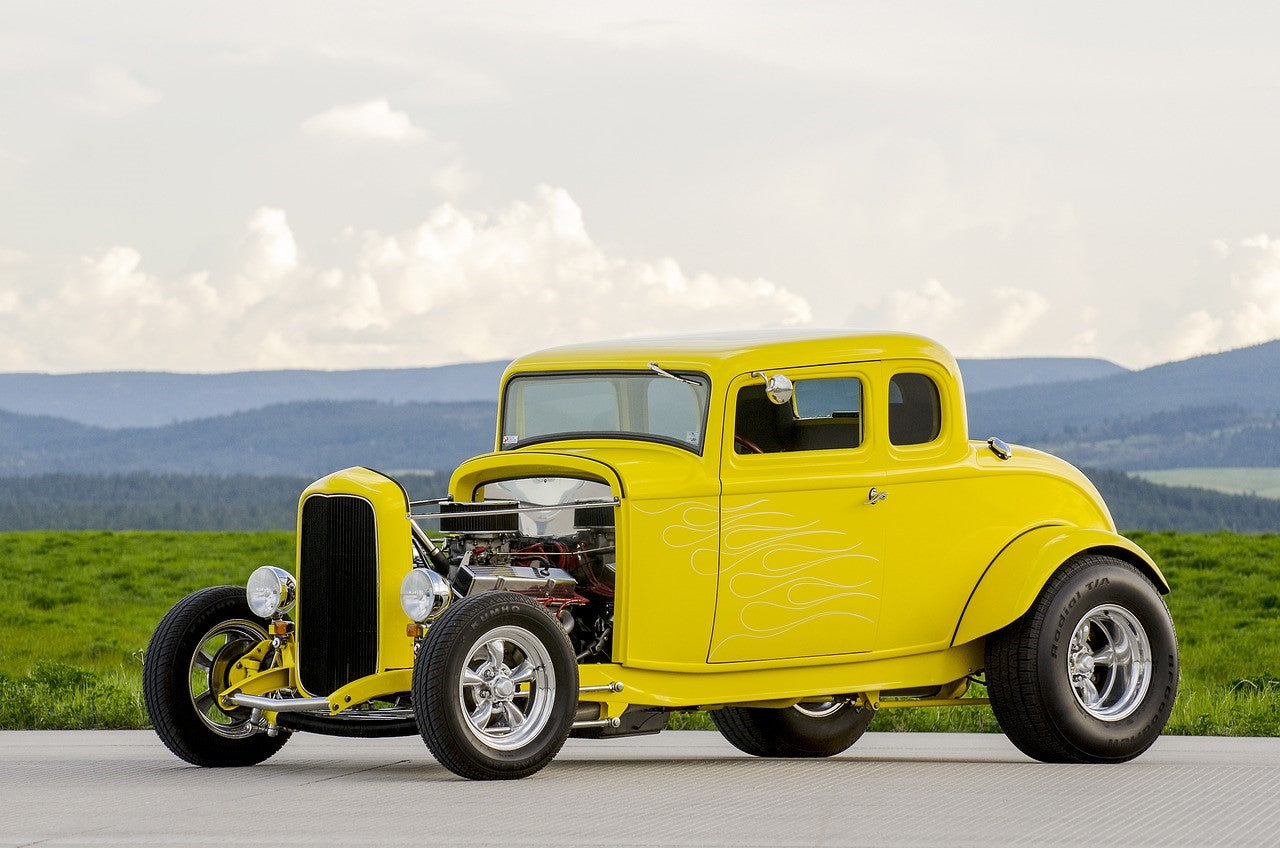
No car has more hot rod history than the 1932 Ford. The Deuce became the foundation of the hobby because it combined the first mass-produced V8 engine with proportions that look correct at any ride height. Coupes, roadsters, and three-window bodies all work on the same frame.
The 1932 Ford frame accepts SBC, BBC, LS, and most small-block Ford combinations with off-the-shelf motor mounts. Complete chassis kits from Pete and Jake's and TCI Engineering take most of the fabrication out of the equation. Dropped I-beam axles, 4-bar front ends, and coilover rear suspensions are all bolt-in affairs.
Deuce bodies are reproduced in fiberglass and steel by multiple manufacturers. Original steel bodies exist but command significant prices. For most builders, a quality fiberglass reproduction body on a properly engineered aftermarket frame is the practical path to a correct-looking 1932 Ford.
1955-1957 Chevrolet ("Tri-Five")

The Tri-Five Chevrolets introduced the small-block Chevy V8 to American buyers in 1955. That engine became the most-swapped power unit in hot rod history, and the cars it came in became equally iconic. The 1955, 1956, and 1957 Chevys each have a distinct front end and trim treatment, but share the same basic structure and have near-identical parts interchangeability.
Tri-Five builds range from mild resto-mods that keep the factory look to full custom cars with chopped tops, custom grilles, and full tube chassis. The body dimensions and proportions work well on both. The SBC fits with the original transmission tunnel, and modern IFS conversion kits from companies like Heidt's and RideTech make it possible to give a Tri-Five the handling of a sports car.
The 1957 Chevy in particular has become a symbol of the era. Its tail fins, chrome, and hood scoop profile make it one of the most recognized classic cars in the world. Reproduction body panels are available for virtually every rust-prone area, which makes a clean Tri-Five build achievable without factory-correct bodywork.
1940 Ford

The 1940 Ford body represents the transition from pre-war styling to the smoother, more envelope-shaped designs that followed. Its flowing fenders and long hood make it a natural fit for both traditional hot rod treatment and the cleaner "custom" look that defines a different branch of the hobby.
The 1940 Ford frame is wider than the Deuce frame and fits a larger range of engine combinations without modification. Builders commonly run small-block Ford engines for a factory-correct feel or drop in an SBC or LS for more parts availability. The car's larger interior dimensions compared to earlier Fords make it a better choice for builders who actually drive their cars long distances.
Top chops, sectioned bodies, and dropped suspensions are the most common modifications. The 1940 Ford body lends itself to subtle customization. A mild 3-inch top chop and a 2-to-3 inch dropped front axle changes the proportions enough to read as a purpose-built rod without removing the car's original character.
1967-1969 Chevrolet Camaro

The first-generation Camaro entered the hot rod world through the pro-touring movement and never left. These cars combine muscle car performance credentials with dimensions that translate well into purpose-built road cars. The factory perimeter frame accepts modern subframe connectors and IRS conversion kits.
First-gen Camaros are the natural choice for a modern hot rod build. An LS engine drops into the bay with minor modification. Suspension options from Heidt's, RideTech, and Detroit Speed cover everything from budget IFS to full coilover builds with adjustable geometry. Wilwood and Baer brake kits provide stopping power to match the added engine output.
The modern hot rod interpretation of the first-gen Camaro typically runs wider rubber on billet wheels, a lowered stance with proper geometry rather than cut springs, and an interior that mixes factory gauges with modern instrumentation. The result drives like a contemporary sports car while reading visually as a classic muscle build.
1933-1934 Ford

Rounding out our top five are the 1933 and 1934 Fords. These models represent a significant evolution from the '32 Ford, featuring a more streamlined design that many consider the pinnacle of pre-war Ford styling.
The '33-'34 Fords came equipped with the Flathead V8, but like other popular hot rods, they're often fitted with more powerful modern engines. Their slightly larger size compared to the '32 model makes them more practical for comfortable cruising while still maintaining a classic hot rod appearance.
Hot rodders typically modify these cars by chopping the top, channeling the body, and installing a more aggressive grille. The distinctive suicide doors on these models add to their appeal and are often retained even in heavily modified builds.
One of the advantages of the '33-'34 Ford as a hot rod platform is the availability of high-quality fiberglass and steel reproduction bodies. This allows builders to create their dream hot rod without the need to source an increasingly rare original body, which can be prohibitively expensive.
Modern Hot Rods: Classic Platforms in Contemporary Builds
A modern hot rod is not defined by the year of the base car but by the approach. The term describes any build that uses current engineering standards to improve performance on a classic body. Modern hot rods run fuel injection, rack-and-pinion steering, four-wheel disc brakes, and coilover suspension systems under period-correct or custom bodies.
All five platforms above produce strong modern hot rods when built with current components. The difference between a traditional build and a modern hot rod is usually under the car: coilovers instead of leaf springs, IFS instead of a solid beam axle, and a standalone ECU instead of a carburetor. The body and the intent remain the same.
For builders who want to start from a modern hot rod direction rather than the traditional path, the first-gen Camaro and Tri-Five Chevy are the most common starting points. Both have the aftermarket support and community knowledge to support ambitious builds with current technology throughout.
Frequently Asked Questions
What makes a car a hot rod?
A hot rod is a vehicle modified primarily for performance, with the builder determining what components to keep, change, or replace entirely. The term originated with modified pre-war Fords but now applies to any era of car built with the same ethos: take the factory car, improve it. There is no governing body and no official definition. If the builder built it to go fast and look right, it is a hot rod.
What is the most popular hot rod base car?
The 1932 Ford remains the most iconic base car in hot rod history. In terms of active builds today, the first-generation Camaro and Tri-Five Chevys compete for volume due to their widespread availability and extensive aftermarket support. The Model A still forms the basis of a large number of traditional and rat rod builds.
How do I find a donor car for a hot rod build?
Craigslist, Bring a Trailer, Hemmings, local swap meets, and estate sales are the most reliable sources. For popular platforms like the Tri-Five Chevy and first-gen Camaro, expect to pay a premium for solid rust-free bodies. Budget builds typically start with a body-only purchase and an aftermarket frame rather than an intact running car.
Can a modern car be a hot rod?
Yes. Hot rodders build on late-model platforms when the car's proportions, power, and modification potential align with their goals. LS-swapped trucks, modified Dodge Challengers, and pro-touring builds on late-model Mustangs all qualify under a broad definition of hot rod. The classic platforms remain dominant because of parts availability and build community depth, not because the hobby limits itself to pre-1960 cars.
|
Shop parts for your hot rod build at Hot Rod Hardware Browse chassis, suspension, and drivetrain components for all five platforms at hotrodhardware.com |
3 comments
Larry the Moe kid
The ’ 32 Most popular is just plain not close to being true. The "33/34 is by far more stylish of the three and outshines the so-called deuce by miles. I drove my 34 Hemi powered, Jag suspended, chopped, 3 window Hi-boy to breakfast today and could not get out of the lot and onto the restaurant because of the gathered crowd around it. There were two other deuces parked in the lot also with a few on lookers, but not a crowd.
All Parts Auto Wrecking
Great article! I love how you highlighted the classic models that have stood the test of time in the hot rod community.
William Emanuel
Excellent article. Now do one on hotrod older trucks, please.