

|
Key Takeaway A carburetor costs less to buy and tune, works well on most street and strip hot rod builds, and keeps the traditional under-hood look. Fuel injection starts easier, runs cleaner, and gives better throttle response across a wide RPM range. Neither is wrong. The right choice depends on how you drive the car. |
What the Debate Is Actually About
The carburetor vs. fuel injection question comes up in every hot rod build conversation because it touches three things builders care about: cost, performance, and appearance.
Carburetors have been on hot rods since the hobby started. They are mechanical, tuneable with a screwdriver, and visually correct on a traditional build. Fuel injection is a modern solution that factory cars adopted for good reasons. For hot rod builders, choosing between them is not about which system is more advanced. It is about which one fits the build.
How a Carburetor Works on a Hot Rod
A carburetor meters fuel and air into the engine using vacuum and venturi effect. The throttle plate opens when the driver presses the accelerator, drawing air through the carburetor throat. As air velocity increases through the narrowed venturi section, fuel is pulled from the float bowl through jets and atomized into the airstream.
The main variables: jet size controls fuel flow at cruise and wide-open throttle. Needle position affects mid-range response. Float level determines fuel delivery pressure. An experienced tuner can dial in a carburetor on the dyno or at the track in an afternoon.
For hot rod applications, Holley 4150 and 4160 series carburetors cover most SBC, BBC, and LS builds. Edelbrock Performer carburetors offer a simpler tuning experience for street-driven cars. Barry Grant and Quick Fuel build high-flow options for dedicated performance applications. CFM sizing matters: too small and the engine starves at high RPM, too large and throttle response suffers at street speeds.
Carburetors - Simple and Straightforward
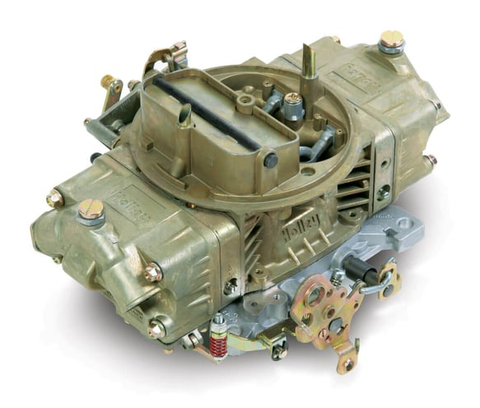
The basic operating concept behind a carburetor is elegantly simple – meter fue
How Fuel Injection Works on a Hot Rod
Fuel injection uses sensors, an ECU, and fuel injectors to deliver a precisely metered fuel charge directly into the intake port or throttle body. The ECU monitors manifold pressure, air temperature, coolant temperature, throttle position, and oxygen sensor feedback to calculate the correct injection pulse width for each engine cycle.
The practical results on a hot rod: cold starts that require no choke fiddling, consistent fuel delivery at altitude and in temperature extremes, and the ability to adapt to different fuel blends without rejetting. EFI systems also allow for data logging and computer tuning, which matters for builders chasing specific power targets.
Retrofit EFI options designed for hot rods include the Holley Sniper EFI, FiTech Go EFI, and FAST EZ-EFI. These systems bolt onto a square-bore or spread-bore carb intake manifold and include a self-tuning ECU that calibrates the fueling over the first hours of driving. For a builder who wants EFI performance without custom wiring, these units are the practical path.
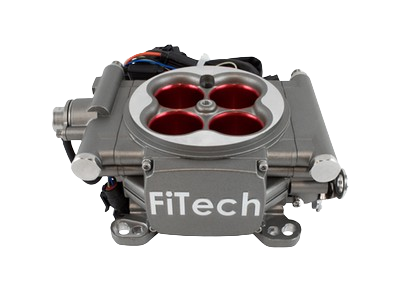
Carburetor vs. Throttle Body Injection: The Middle Ground
Throttle body injection, often called TBI, sits between a traditional carburetor and multi-port fuel injection. A TBI unit mounts in the same position as a carburetor and uses the same intake manifold, but delivers fuel through injectors rather than jets and venturis.
The Holley Sniper, FiTech Go EFI, and FAST Throttle Body EFI are all TBI systems. They look like a carburetor from most angles under the hood, which matters for builders who want a period-correct or traditional appearance while gaining the cold-start and part-throttle refinement that EFI provides.
Throttle body injection works well for street-driven builds with mild-to-moderate cam profiles. It is not the right choice for high-horsepower builds with radical cams, where multi-port injection provides better fuel atomization and distribution across all cylinders.
The comparison between carburetor vs. throttle body injection comes down to convenience. A TBI unit typically self-tunes, requires no jetting changes for altitude or temperature, and starts consistently in cold weather. A carburetor needs manual adjustment when conditions change significantly but costs less to buy and has no electronics to fail.
Carburetor vs. Fuel Injection: How They Compare
|
Factor |
Carburetor |
Fuel Injection (EFI) |
|
Cold start |
Needs choke, warm-up time |
Immediate, no choke required |
|
Altitude/temp changes |
Requires re-jetting |
Self-compensating |
|
Tuning method |
Mechanical jets, needles |
Computer-based, data logged |
|
Cost |
Lower upfront |
Higher upfront |
|
Visual appearance |
Traditional hot rod look |
Modern, less period-correct |
|
Street drivability |
Good to excellent with tuning |
Excellent out of box |
|
High-RPM performance |
Excellent with proper sizing |
Excellent (multi-port) |
|
Maintenance |
Periodic cleaning, jetting |
Filter replacement, software updates |
Which System Is Right for Your Build
Run a carburetor if:
The car sees drag strip use where carb-specific tuning (power valves, accelerator pump cams) gives you precise control. The build is traditional or early-period, and the under-hood appearance matters as much as performance. Budget is a priority. Or the build already uses a high-rise intake manifold that makes a carb the natural fit.
Run fuel injection if:
The car gets driven in cold weather, at altitude, or in widely varying conditions where a carb would need re-jetting. The build is a daily driver or gets used on long road trips. Or the engine management system will handle other functions like nitrous staging, boost control, or traction management, where a standalone ECU delivers better results.
Run throttle body injection if:
You want the convenience of EFI without touching the intake manifold. The build uses a traditional carbed intake manifold and you want to keep the visual profile close to stock. The car is street-driven and you want consistent start-up without the hassle of cold-start tuning.
Frequently Asked Questions
Is fuel injection better than a carburetor for a hot rod?
For street-driven hot rods that see cold mornings, altitude changes, or daily use, fuel injection is more convenient. For dedicated strip cars, traditional builds, or builders who prefer mechanical simplicity, a carburetor performs equally well with proper tuning. Neither is categorically better.
Can I put fuel injection on a carbureted hot rod engine?
Yes. Throttle body EFI systems from Holley, FiTech, and FAST mount directly onto a standard carburetor intake manifold. Multi-port EFI requires an EFI-specific intake manifold with individual fuel rails and injector bungs for each cylinder, which means a manifold change.
Does fuel injection make more power than a carburetor?
Not necessarily at the same fuel delivery quantity. A properly jetted carburetor and a properly tuned EFI system produce similar power numbers on a given engine. EFI does a better job of maintaining that power across varying conditions and can adapt to changes a carb cannot self-correct. The bigger difference shows up in part-throttle response and fuel efficiency rather than peak horsepower.
What is the best carburetor for a hot rod?
For a street-driven SBC or BBC making 350 to 500 horsepower, a Holley 650 to 750 CFM double-pumper or an Edelbrock 750 CFM Performer Series covers most builds. Edelbrock carbs are easier to tune for builders without dyno access. Holley offers more adjustment range for builders who want to chase specific performance targets. For a dedicated drag application, Holley 850 to 950 CFM in a HP or Ultra HP series handles most race SBC and BBC combinations.
Related Products:
|
Shop carburetors, EFI systems, and intake manifolds at Hot Rod Hardware Browse Holley, Edelbrock, and FiTech options at hotrodhardware.com |