
|
Key Takeaway The chassis frame determines your build's stance, power capacity, and what suspension and drivetrain components fit. Choosing the right hot rod frame early saves money and fabrication time. Here is how the most popular options break down. |
What Makes a Good Hot Rod Frame
A hot rod frame needs to handle far more than the factory ever intended. Stock frames from 1928 through the early 1950s were engineered for 40-to-80 horsepower flathead engines and 50-mph top speeds. Modern builds put 300-to-600 horsepower engines on those same frame rails.
The key measurements: frame rail width, crossmember location, and the suspension mounting points. These determine what body styles fit, what suspension geometry is achievable, and whether an LS or SBC engine drops in without major cutting. Hot rod frames and hot rod chassis kits from aftermarket manufacturers solve these problems by engineering the geometry around modern performance from the start.
Classic Street Rod Frames: 1932 Ford Deuce and Model A
The 1932 Ford frame, called the Deuce, is the most replicated hot rod chassis frame in history. Its curved rails, narrow front crossmember, and overall proportions work under coupes, roadsters, and cabriolets with minimal body modification. The Deuce frame accepts SBC, BBC, and LS engines with standard motor mount kits. Aftermarket crossmembers and boxing plates are widely available to bring the frame up to modern strength standards.
The Ford Model A frame from 1928 to 1931 is the other cornerstone. Lighter than the Deuce frame and slightly narrower, it suits traditional T-bucket and roadster builds. Model A frames require boxing and reinforcement before they can handle modern power. Pete and Jake's builds their Model A chassis package around a fully boxed frame with a tubular X-member and rear coilover crossmember already integrated.
Both frames benefit from factory-style dropped axle front ends paired with 4-bar or hairpin rear suspension. The visual result is a traditional hot rod that sits low, looks right, and handles the street without drama.
Street Rod Chassis Kits: TCI Engineering and Pete and Jake's
For builders who want a complete, engineered solution rather than starting from a raw frame, street rod chassis kits eliminate most of the fabrication work. TCI Engineering and Pete and Jake's are the two names that come up in every conversation about complete hot rod kit frames.
TCI Engineering Frames
TCI Engineering has built its reputation on chassis systems that prioritize ride quality and safety without sacrificing traditional appearance. TCI frames cover the most popular hot rod platforms: 1928-31 Model A, 1932 Ford, 1933-34 Ford, and a range of other early applications. Their chassis packages include boxed frame rails, integrated crossmembers, and suspension mounting points engineered for coilover setups and modern brake systems.
TCI frames are built in the USA and designed to accept both IFS and solid axle front ends depending on builder preference. The hardware is bolt-in where possible, which shortens build time. For a builder who wants a correct-looking street rod chassis with modern engineering underneath, TCI is the benchmark.
Pete and Jake's Complete Chassis
Pete and Jake's complete chassis for the 1932 Ford is one of the most comprehensive hot rod kit offerings available. The package includes frame rails, front end assembly with drop axle, steering, disc brakes, motor mounts, transmission mount, and rear suspension. A builder can receive the Pete and Jake's 1932 complete chassis and have a rolling frame ready for body mounting with minimal additional sourcing.
Their 1928-31 Model A chassis follows the same approach: fully boxed frame, tubular X-member, and rear coilover crossmember, all designed to accept the most common engine and transmission combinations. For builders on a specific timeline, these complete chassis kits reduce the project by months.
Rat Rod Chassis and Rat Rod Frame Options
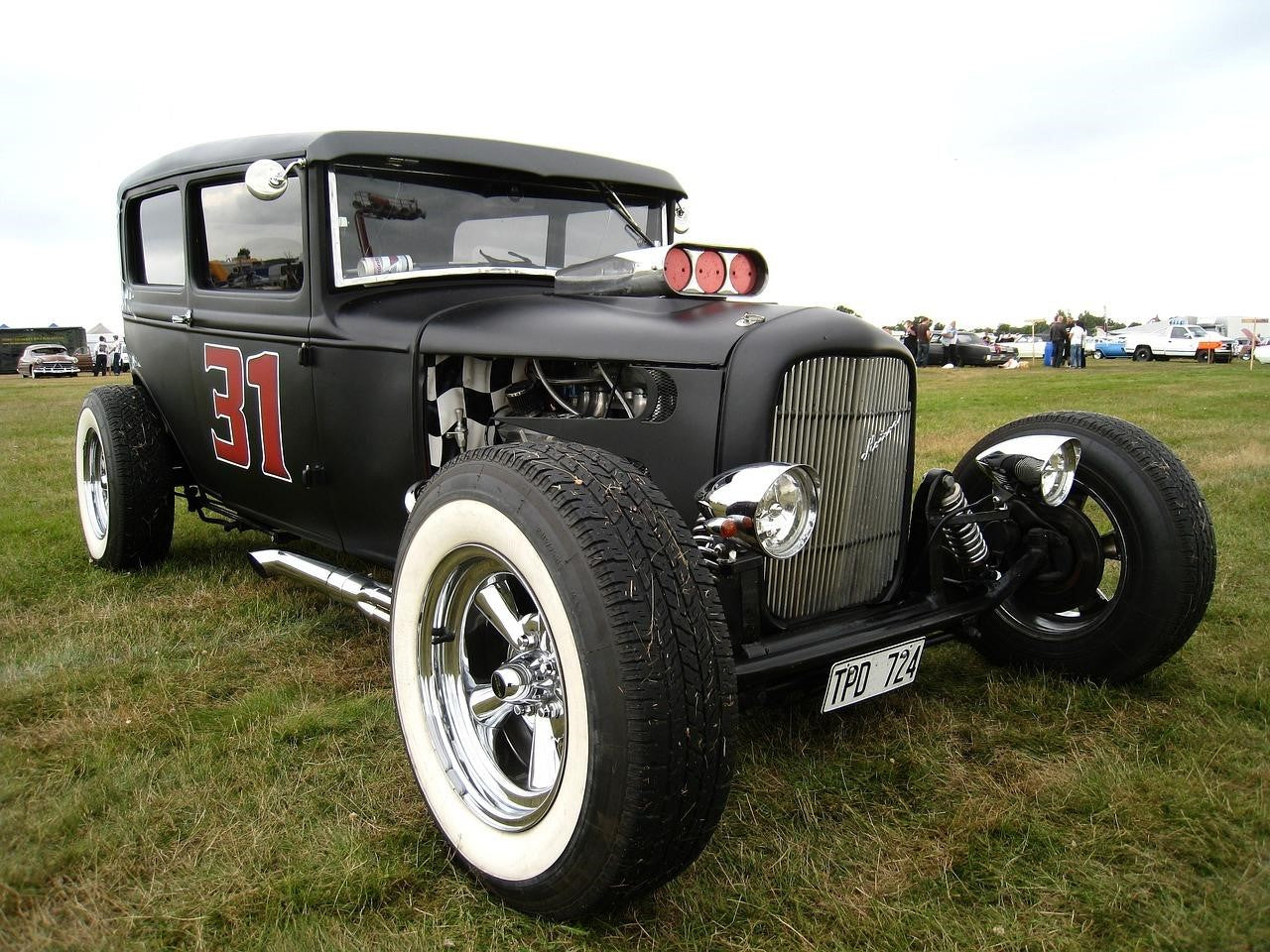
Rat rod chassis priorities differ from street rod builds. The rat rod aesthetic favors raw materials, visible fabrication, and low cost over polished engineering. That changes what makes a good rat rod frame.
The most common rat rod frame approaches: start with a period Ford frame (Model A, Model T, or early V8), strip it to the bare rails, box it for strength, and build the suspension from scratch. Alternatively, use a donor vehicle frame that provides the right width and length for the body style being used.
For rat rod frames, the priority is finding the right width and height for your body. A 1934 Ford body typically needs a frame about 28 inches wide at the firewall. A 1937 Ford body needs more room. Most builders source their rat rod chassis locally from junkyards and swap meets, then modify from there.
The benefit of starting with a purpose-built rat rod frame over a junkyard frame: known geometry, consistent rail dimensions, and no hidden rust or cracks in critical areas. Several chassis builders offer bare-rail rat rod frames in common widths for exactly this reason.
Using an S10 Frame for a Rat Rod Build
The S10 frame has become one of the most popular platforms for rat rod builds. The reason: S10 frames are cheap, widely available, and proportionally correct for 1930s and 1940s truck and car bodies. The front crossmember width on a second-generation S10 (1994-2004) suits many early Ford body styles without major modification.
S10 frames arrive with an IFS front suspension already installed. Some rat rod builders retain the stock IFS for the improved ride quality it provides. Others strip the front end and replace it with a dropped I-beam axle for the traditional look. Both approaches work. The S10 rear axle can be kept, upgraded, or swapped for a Ford 9-inch depending on power level.
S10 frame rat rod builds require boxing the frame rails before adding significant power. The stock S10 rails are factory-width unibody construction. Boxing them with flat plate steel on the inside of the C-channel adds the rigidity needed for a solid engine and suspension setup.
One practical note: measure twice before committing to an S10 frame for a specific body. Not all S10 generations share the same dimensions. The 1983-1993 wheelbase is shorter than the 1994-2004. Check that the wheelbase and rail width work for your body before you cut anything.
Custom Tube Chassis for Hot Rod Builds
A custom tube chassis is the choice when no off-the-shelf frame works for the build. Tube chassis are fabricated from chromoly or mild steel square or round tubing, engineered around specific suspension geometry, body mounting requirements, and power level.
The advantage of a tube chassis is total control. Builders can set the exact frame width, crossmember position, suspension pickup points, and engine placement. The disadvantage is cost and time. A quality tube chassis build requires a skilled fabricator and significantly more hours than a kit chassis.
For competition builds, roadsters, and one-off show cars, the tube chassis is often the only path to the geometry needed. For most street-driven hot rods, a TCI or Pete and Jake's kit chassis delivers comparable results faster and at lower cost.
Frequently Asked Questions
What is the difference between a hot rod chassis and a hot rod frame?
The terms are often used interchangeably. Technically, the frame refers to the bare steel rails and crossmembers. The chassis includes the frame plus all suspension, steering, and brake components mounted to it. A hot rod chassis kit delivers a complete rolling platform. A hot rod frame kit delivers the structure only.
How much do hot rod chassis kits cost?
Entry-level complete chassis from TCI Engineering or Pete and Jake's start around $12,000 to $15,000 for a basic straight axle setup. IFS configurations with coilovers and power steering run $18,000 to $25,000. Rolling chassis, which include frame rails and crossmembers only, start around $3,000 to $8,000 before you add suspension and brakes.
Can I build a rat rod on a 1932 Ford frame?
Yes, and many builders do. The Deuce frame suits rat rod builds that need the proportions of an early Ford body. A Deuce frame with a tube axle up front, a flathead or SBC in the middle, and a solid rear axle is a classic rat rod formula. The difference from a street rod is in the execution: left rougher, with visible welds and period materials.
What frame fits under a 1932 Ford body?
The original 1932 Ford frame works, and so do aftermarket reproductions from TCI Engineering and Pete and Jake's. Rail width at the front is approximately 28 inches, widening to about 32 inches at the rear. Most purpose-built 1932 Ford chassis kits are dimensioned to accept the stock body with factory mounting locations.
Related Resources:
Crossmembers for hot rod chassis builds
|
Shop hot rod chassis frames, street rod kits, and chassis components at Hot Rod Hardware Browse Pete and Jake's complete chassis, TCI frames, and crossmembers at hotrodhardware.com |
1 comment
Michael Martin
Good morning,
I have a customer with a 1948 Studebaker Landcruiser. Last year I completed a LS Engine and 4l60e swap in it. Now the customer would like a frame upgrade. Can you help me with this?
Thank you,
Mike Martin
520-955-3858
Guerro Loco, Inc