
|
KEY TAKEAWAYS |
|
• 1932-1940 Ford structural panels are available as reproduction stampings — builders no longer need to hunt salvage yards for solid original metal. |
|
• Rootlieb Inc. and Direct Sheet Metal cover floor pans, firewall panels, trunk floors, and body panels for this era. |
|
• Year-specific ordering matters: a 1932 Ford body differs from a 1933-34 Ford body differs from a 1935-40 Ford body. |
|
• The seven most-needed structural components for any 1930s Ford build include floor pans, firewall, trunk floor, inner cowl, running board supports, cab corners, and frame crossmembers. |
|
• Hot Rod Hardware stocks both Rootlieb and Direct Sheet Metal for early Ford applications. |
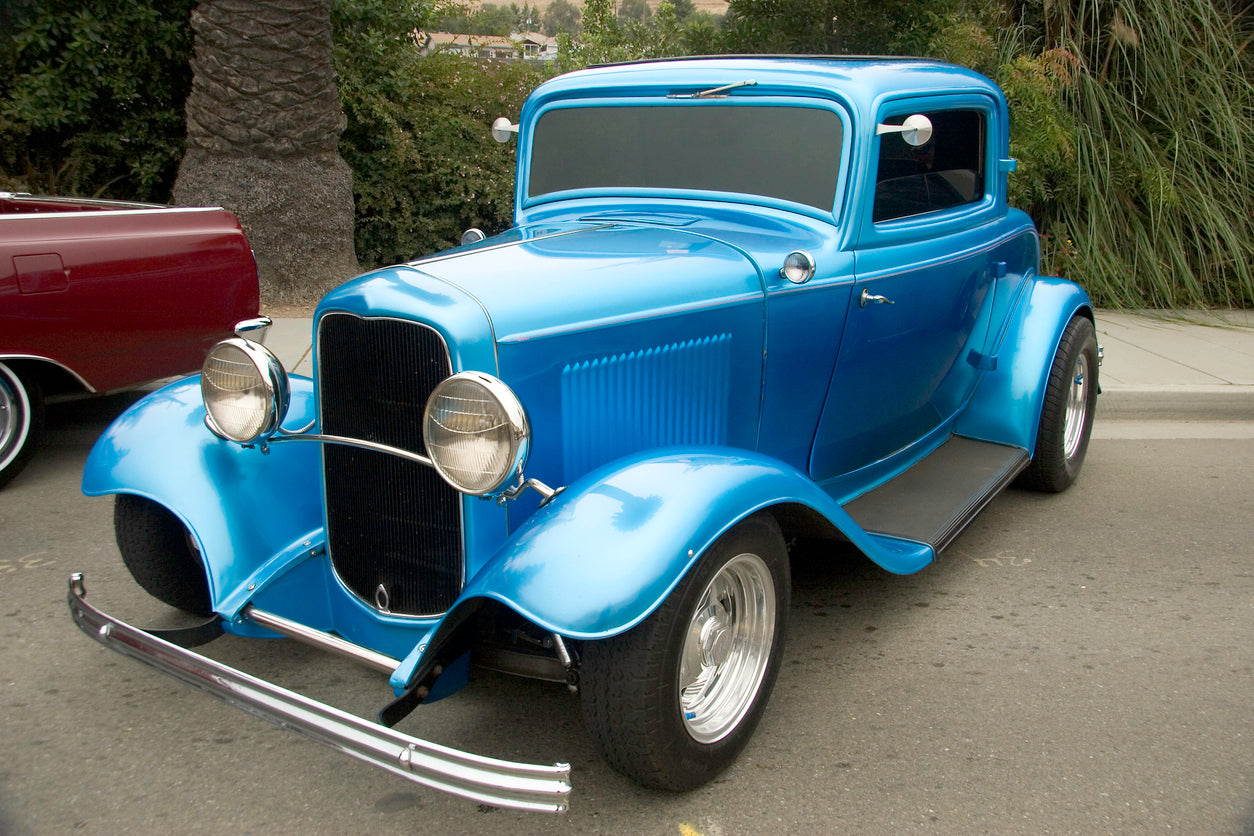
The 1932-1940 Ford is the foundation of American hot rodding. It is also, in 2026, an 86-94 year old vehicle. Most surviving examples have had at least one floor replaced, a firewall patched, or a trunk floor shimmed with something that was never meant to be structural. Builders who want to do the job properly need reproduction stampings manufactured to correct specs, not salvage yard scraps or handmade patches. This guide maps the structural components every 1930s Ford restoration requires, where to source them, and what to confirm before you order.
The Seven Structural Components Every 1930s Ford Build Needs
Before you spend a dollar on paint or chrome, these are the components to inspect and address. All seven affect structural integrity, and all seven are available as reproduction panels for most 1932-1940 Ford body styles.
1. Floor Pans
The floor pan in a 1930s Ford is a single-piece stamping that runs from the firewall toe panel to the seat riser. Rust typically starts at the rear corners where road debris collects and at the front corners where the cowl drains into the floor seam. A floor pan with any perforation needs replacement, not patching. The structural load path runs through the floor into the rocker rails.
2. Firewall (Dash Panel)
The 1932-1940 Ford firewall is integral to the body structure. It ties the cowl box, the front frame horns, and the A-pillars together. Lower firewall rust is nearly universal on cars that have not been stored indoors. Upper firewall rust comes from cowl water infiltration — check the cowl vent seal before assuming the firewall is the problem.
3. Trunk Floor
The trunk floor on 1933-40 Fords sees moisture from roof leaks, seal failures, and condensation. Trunk floors on original metal are rarely intact on cars that have spent time outdoors. Replacement trunk floor panels are available and typically install without disturbing the body structure.
4. Inner Cowl / Cowl Box
The inner cowl sits between the windshield base and the firewall. It channels water away from the engine bay. When the cowl drain goes, water tracks behind the dash and into the floor corners. Inner cowl repair panels are available for most 1932-40 body styles.
5. Running Board Supports
Running board supports on 1930s Fords are structural — they tie the body to the frame at the rocker line. Rotted supports allow the body to flex at the sill, causing door gaps to open and close as the chassis twists. Reproduction running board supports for 1932-40 Fords are available in bare steel.
6. Cab Corners / Rear Quarter Lower Sections
Cab corners collect standing water and are typically the first visible rust on any survivor. Reproduction cab corner patches and full lower rear quarter sections are available. On sedans and coupes, address the cab corners before welding in a new floor pan, since the floor and cab corner share a seam.
7. Frame Crossmembers
The frame crossmembers on 1932-40 Fords are open-section C-channel that traps moisture on the inside face. They are rarely replaced and rarely inspected until a builder puts the chassis on a rotisserie. Reproduction crossmembers for the 1932 Ford three-window and five-window coupe chassis are available. Confirm which crossmember positions your chassis is missing before ordering.
1932-1940 Ford Body Styles and Fitment Differences
The 1932-1940 Ford span covers distinct body generations. Panels are not interchangeable across these years. Order specifically.
|
Year Range |
Body Generation |
Floor Pan Fitment |
Notes |
|---|---|---|---|
|
1932 |
Ford Model 18 / Model B |
Year-specific |
Defines the hot rod era; deuce coupe. Floor and firewall distinct from all later years. |
|
1933-1934 |
Ford Model 40/40A |
Year-specific |
Slightly longer wheelbase than 1932. Different floor geometry. Three-window vs. five-window differ. |
|
1935-1936 |
Ford Model 48/68 |
Shared across both years |
Pontoon fenders begin. Floor and firewall carry over between years. |
|
1937-1938 |
Ford Model 74/81A |
Shared across both years |
Larger body. Floor pans wider than pre-1937. Confirm wheelbase before ordering. |
|
1939-1940 |
Ford Model 91A/01A |
Shared across both years |
Last of the flathead-era body shells. Floor and firewall shared between 39 and 40. |
Rootlieb Inc.: What They Cover
Rootlieb Inc. specializes in early Ford body panels with particular depth for 1928-1948 applications. The Rootlieb catalog covers steel body panels, door skins, fender panels, and hood components for Model A, Model B, V8, and the flathead era Fords. Their panels are manufactured in the USA.
For structural applications, Rootlieb covers inner and outer A-pillar sections, door bottoms, and rocker panels for 1928-1948 Fords. Their panels are stamped to original tooling contours. Hot Rod Hardware stocks Rootlieb panels and can source specific items from their catalog.
Direct Sheet Metal: What They Cover
Direct Sheet Metal covers floor pans, firewall panels, trunk floors, and inner cowl sections for 1928-1960 Ford and Chevy applications. Their floor pans are stamped to 18-gauge specification and include the correct seam locations for original Ford body construction.
For a 1932-1940 Ford restoration, Direct Sheet Metal covers the core structural panels: floor pans by year, lower firewall sections, and trunk floor assemblies. Their panels fit against original metal without requiring shimming or adjustment when the correct year is ordered.
Gauge Matters as Much for Early Fords as It Does for Later Cars
The same gauge issue that affects 1960s Chevy reproduction panels affects early Ford panels. Factory Ford floor pans from 1932-1940 were stamped in 18-gauge steel. Reproduction panels from offshore manufacturers typically arrive in 20-gauge. The result is the same: panels that warp during welding, flex under load, and show stress cracks after paint.
Rootlieb and Direct Sheet Metal both spec 18-gauge for structural panels. This is why their panels cost more than generic catalog alternatives, and why they produce restorers who do not come back to redo the floor in three years.
Sourcing Early Ford Hard-to-Find Parts
Not every structural component for a 1930s Ford is available as a catalog reproduction panel. For components outside the standard reproduction range, the sourcing options are: NOS (new old stock) at swap meets, used original metal from donor cars, or fabrication from flat sheet.
Frame crossmembers for pre-1935 Fords are the most common hard-to-find item. Running board supports for 1935-40 Fords are the second. For these, Desert Valley Auto Parts in Arizona and other specialty salvage operations maintain early Ford inventories. For structural fabrication, chassis shops that specialize in early Ford builds can produce crossmembers to spec.
Hot Rod Hardware's catalog covers the Rootlieb and Direct Sheet Metal ranges for 1930s Ford structural panels. For parts outside that range, the team at HRH (507-527-1020) can advise on sourcing options.
Before You Order: A Pre-Purchase Checklist
-
Confirm the exact year and body style (three-window coupe, five-window coupe, Tudor sedan, Fordor sedan, cabriolet, pickup).
-
Photograph the existing structural panels before any demolition work — these images help identify panel boundaries and confirm which sections can be preserved.
-
Probe all suspected rust areas with an awl before ordering. You may find the damage extends further than visible surface rust suggests.
-
Confirm whether the car has been previously repaired in the affected area. A prior weld line means the panel geometry may be non-original, which can affect new panel fitment.
-
For floor pans, measure the transmission tunnel to confirm it matches your intended drivetrain. Hot rod builds often use modified tunnels for V8 swaps.
FAQ
Will 1932 Ford floor pans fit a 1933 Ford?
No. The 1932 Ford body is narrower and shorter than the 1933. Floor pan stampings are specific to each year range. Confirm your year before ordering.
Where do 1930s Fords typically rust first?
Lower firewall corners, floor pan front corners at the cowl drain, and cab corners behind the rear wheel opening. Running board supports rust from the inside out and are often missed until the body shows visible sag at the sill.
Can I use a 1940 Ford floor pan in my hot rod if I am shortening the wheelbase?
If you are channeling or sectioning the body, you will modify the floor pan regardless of which year it came from. Start with the correct year panel for your body shell, then fabricate the modifications. Beginning with the wrong year panel adds fitment problems to an already complex fabrication task.
What is the difference between a full firewall panel and a lower firewall section?
A full firewall replacement spans from the cowl box to the frame rails and includes the dash mounting flange. A lower firewall section covers only the bottom portion where rust is most common. Lower sections install without removing the dash, making them the practical choice for most builds that are not full rotisserie restorations.
Does Hot Rod Hardware stock firewall panels for 1939-1940 Fords?
Hot Rod Hardware stocks Direct Sheet Metal and Rootlieb panels for 1928-1948 Ford applications. Contact HRH at 507-527-1020 to confirm availability for your specific year and body style.